Home  /  Geotechnical Engineering in Putnam County, FL

Geotechnical Engineering in Putnam County, FL

Geotechnical engineering in Putnam County, FL — borings, lab testing, Phase I ESAs for Palatka and the St. Johns riverfront. Call (352) 619-9292.

  • FDOT Accredited Lab
  • CMEC Accredited
  • In-House Laboratory
  • All 67 FL Counties
Geotechnical Engineering in Putnam County, FL

PALATKA · CRESCENT CITY · INTERLACHEN

In Putnam County the St. Johns River sets the geotechnical rules. Soft organic soils and shallow groundwater near the river, dry sand ridges inland, and a riverfront with a century of industrial history behind it — each one changes what a site investigation needs to look at before anyone builds.

The river sets the rules

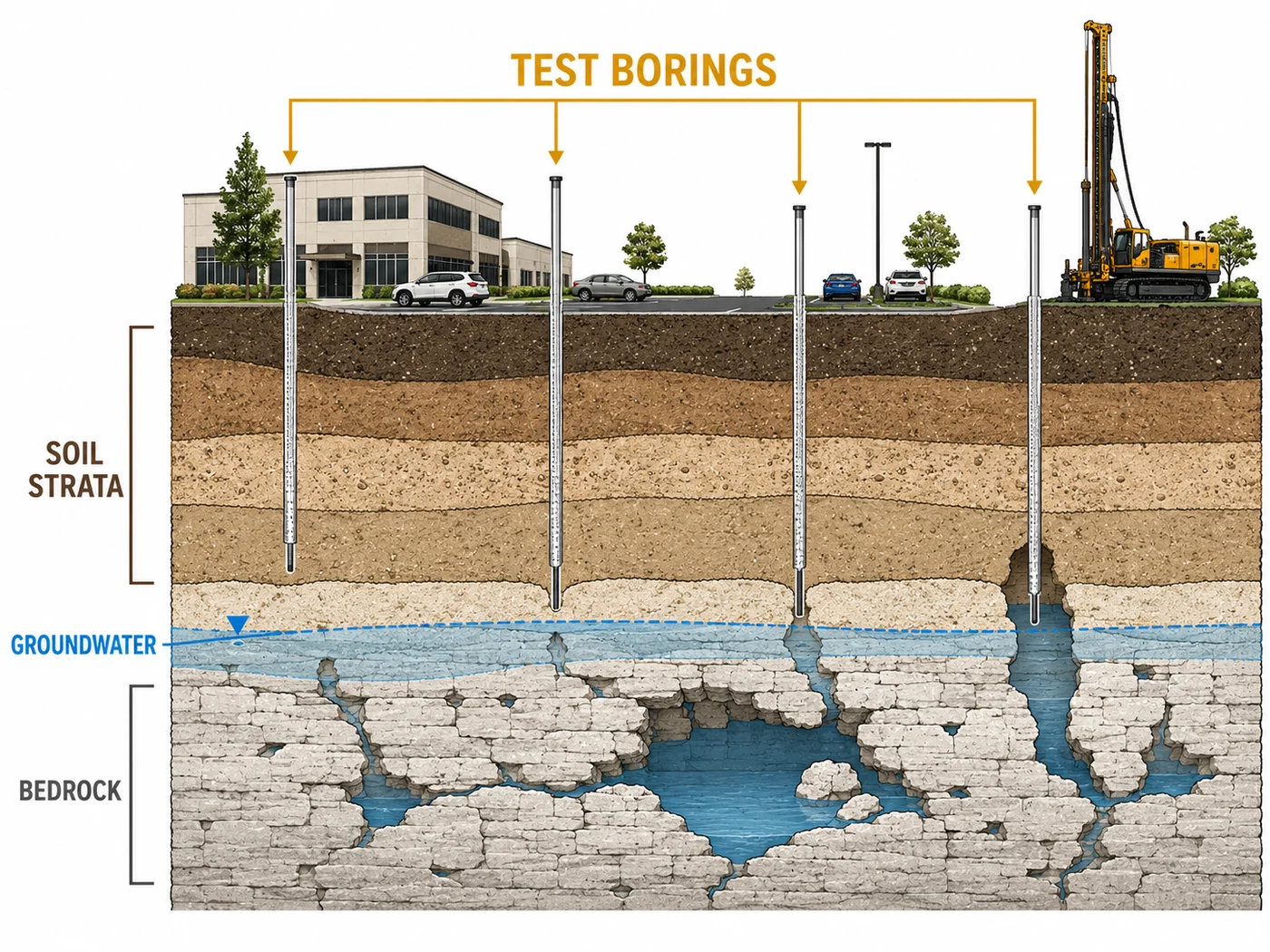
The St. Johns is a slow, wide, low-gradient river, and the soils along it reflect that. The floodplain around Palatka and East Palatka holds organic muck, peat, soft silty clays, and loose alluvial sands — materials deposited by standing and slow-moving water over thousands of years. They are compressible, weak, and saturated, with groundwater commonly within a few feet of the surface. None of that is exotic. All of it is disqualifying for a conventional shallow footing if nobody checks first.

Flood-zone construction adds a second layer. Elevating a structure usually means a fill pad or an elevated foundation, and both interact with soft ground: new fill placed over muck consolidates the muck beneath it, so the pad itself settles for years after placement. The thickness of the compressible layer has to be known before the earthwork strategy is chosen — which is why river-adjacent projects start with SPT borings, not with a fill quote. Depending on what the borings find, the answer may be overexcavation and replacement, surcharging, or carrying loads past the soft zone entirely with deep foundations. We’ve seen all three be the right call within a mile of each other.
Environmental due diligence matters here more than most places

Palatka’s riverfront has been working land for over a century — milling, rail, boatyards, bulk storage. That history is part of the town’s identity, and it’s also exactly the kind of land-use record that makes lenders and buyers pause. A property’s past uses can leave subsurface conditions that a survey and a title search will never show.

A Phase I environmental site assessment is the standard first step before purchasing or refinancing commercial or industrial property, and lenders commonly require one. Be clear about what it is: a records-and-reconnaissance study. It samples nothing. When a Phase I flags a recognized environmental condition, a Phase II puts a drill rig and a laboratory behind the question — actual soil and groundwater samples, actual analytical data. On older riverfront and rail-adjacent parcels in Putnam County, budgeting for that possibility up front is realism, not pessimism.

Inland Putnam is a different county

Leave the floodplain and the geology flips. The Interlachen highlands are high, dry, lake-dotted sand hills — deep fine sands over limestone, with the area’s hundreds of small round lakes betraying their dissolution origin. Crescent City sits on a ridge between Crescent Lake and Lake Stella. These uplands drain well and generally make good building ground, but the karst underneath them is real: where the lakes came from is where sinkholes come from. Where a structure shows distress or a depression opens, a sinkhole investigation is the right instrument, and Florida Statute 627.707 governs how insurance claims for sinkhole loss are handled.

Much of the rest of the county is rural and agricultural, and conversions of that land — a farm parcel becoming a homesite, a grove becoming a subdivision — carry their own subsurface unknowns: buried debris from demolished structures, old irrigation wells, unrecorded fill, septic systems nobody mapped. Ground penetrating radar is a fast way to screen a building footprint for buried anomalies before drilling confirms what they are. GPR has limits — it doesn’t replace borings — but as a first pass on converted ag land it earns its cost.

A smaller market shouldn’t mean smaller answers

Putnam County is not a big construction market, and it shows in how the large regional firms treat it: a Palatka project gets quoted late, scheduled last, and billed for the mobilization from Jacksonville or Orlando. We think that’s backwards. The geotechnical problems here — organics, shallow groundwater, flood-zone earthwork, karst — are at least as demanding as anything in the metro counties.

FGS is based in Ocala at 302 SW 33rd Ave, about an hour from Palatka. We treat Putnam as home territory, not a frontier. Samples come back to our own accredited soil testing laboratory rather than being shipped to a subcontracted lab, every report is stamped by a Florida-licensed P.E., and the phone gets answered. Founded in 2023, working all 67 Florida counties.

What a Putnam County investigation looks like

Scoping. A call to size the program

structure type, loads, whether the site touches the floodplain, what the lender or building department wants to see.

Field work. SPT borings sized to the structure, hand augers or GPR where they add value, groundwater observations recorded at the time of drilling.

Laboratory testing. Moisture, organics content, gradation, Proctors as needed — run in-house, which keeps turnaround in our control.

Report. A stamped geotechnical engineering report with boring logs, lab data, and foundation and earthwork recommendations a structural engineer can design from.

Building departments in the area commonly ask for a geotechnical report with new construction and for density testing on structural fill, and Chapter 17 of the Florida Building Code places soils and foundation work under special inspection on larger projects. Call (352) 619-9292 to talk through a Putnam County site.

FAQ

Questions we get, answered straight.

What does a geotechnical report cost in Putnam County?

Residential investigations generally run $1,500–$3,500; commercial projects typically fall between $5,000 and $20,000+ depending on footprint, loads, and boring depths. River-adjacent sites sometimes cost more to investigate than upland sites because soft soils force deeper borings — but those are precisely the sites where skipping the investigation is most expensive.

Do I need a Phase I ESA to buy commercial property in Palatka?

If financing is involved, your lender will very likely require one, and on riverfront or rail-adjacent parcels you should want one regardless. The Phase I also matters legally: performing appropriate due diligence before purchase is the basis for certain liability protections for new owners under federal environmental law. It is a records study, not a sampling study — if it flags a concern, a Phase II with soil and groundwater sampling is the next step, and we can carry a project through both.

Can I build near the St. Johns River floodplain?

Usually, yes — the question is what the foundation has to do to get there. Thin organic layers can be excavated and replaced with compacted fill. Thicker soft zones push the design toward surcharging or deep foundations such as piles, which carry the structure to competent material below. The wrong answer is placing a fill pad on unmapped muck and hoping; that pad will settle, and it will take the slab with it. Borings first, earthwork plan second.

Does FGS actually take small Putnam County jobs?

Yes. A single-family lot in Interlachen or a small commercial pad in Crescent City is a normal project for us, not a favor. Palatka is about an hour from our Ocala office, the rig and the lab are ours, and the economics that make small jobs unattractive to large regional firms don’t apply the same way here. Call (352) 619-9292 and you’ll get a direct answer on scope and price.

Get started

Get a free geotechnical quote.

Tell us about your project and we'll get right back to you. Industry-leading turnaround on stamped reports, fieldwork, and lab results.

  • Stamped, defensible deliverables for permits & lenders
  • 5–7 day lab results, reports in 3–4 weeks
  • We respond within one business day

Prefer to talk? (352) 619-9292

We respond within one business day. No spam, ever.

Serving Putnam County

Services we offer in Putnam County

Every FGS service line is available throughout Putnam County — fieldwork, drilling, and our in-house accredited lab, all from Ocala:

Nearby

Nearby service areas