On this page
Here is the honest version up front: most of what people fear is a sinkhole isn’t one. We investigate cracked slabs, sagging yards, and sticking doors across Florida, and the majority trace back to something ordinary — a plumbing leak, buried stumps or construction debris breaking down, or plain settlement of fill soil. A small number do point to real ground loss, though, and the serious cases follow a pattern. This guide covers which signs deserve attention, which usually don’t, and how an actual investigation tells the difference.
Signs Worth Attention Now
These don’t confirm anything by themselves. They justify watching closely, and in combination they justify a phone call.
- Stair-step cracks that are widening. These follow the mortar joints in a block or brick wall in a staircase pattern. A hairline stair-step crack is common in Florida masonry. One you can slide a coin into, or one that’s visibly wider than it was three months ago, means the foundation is moving.
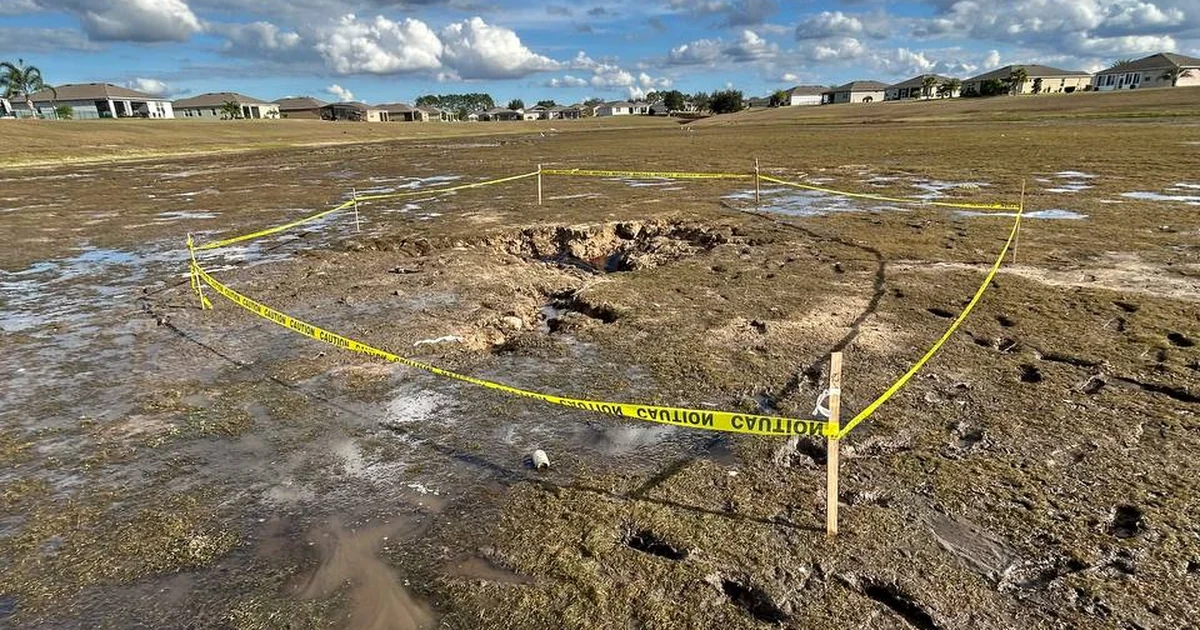
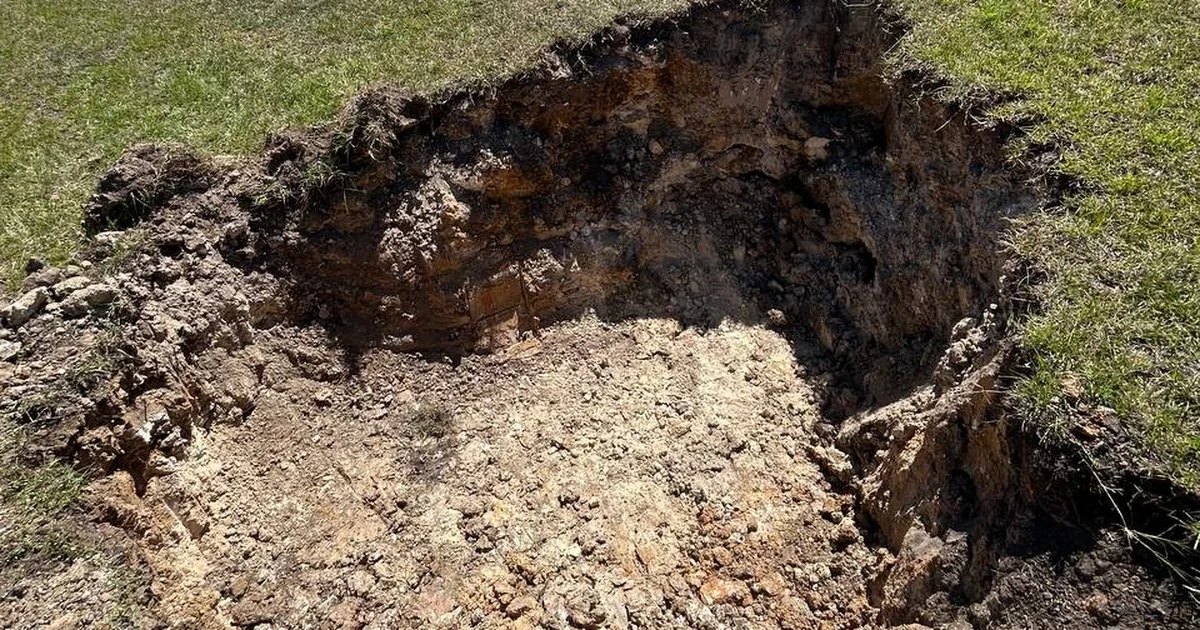
- A new or deepening depression in the yard. A roughly circular low spot that holds water, comes back after you fill it, or has fence posts and small trees starting to lean toward its center.
- Doors and windows racking out of square. One sticky door is humidity. Several doors and windows on the same side of the house going out of square together suggests that side of the structure is tilting.
- Cracks opening across the floor slab, or cabinets and trim pulling away from walls they used to sit flush against.
- Sediment in well water, or a pond or well level dropping with no drought to explain it.
None of these confirm a sinkhole. Buried organics, old construction debris, plumbing leaks, and ordinary settlement produce the same symptoms. What raises the odds is progression and clustering: signs that are getting worse, and several of them showing up together.
Signs That Are Usually Nothing
Hairline cracks in drywall, especially vertical or diagonal ones running off the corners of doors and windows, are normal. Drywall cracks at its weak points as a house dries out and the seasons cycle. The same goes for hairline shrinkage cracks in concrete and stucco: slabs shrink as they cure, and Florida’s wet-dry swings keep them moving slightly forever.
Nail pops, a door that sticks in August and frees up in January, one short crack in a tile floor — these are house things, not ground things.
The useful test is change over time. Photograph the crack with a date, mark its ends in pencil, and check back in a couple of months. A crack that has looked the same for five years is telling you it’s done moving. A crack that has grown past your pencil mark is telling you to measure again — and maybe to make that call.
Why Florida Gets Sinkholes in the First Place
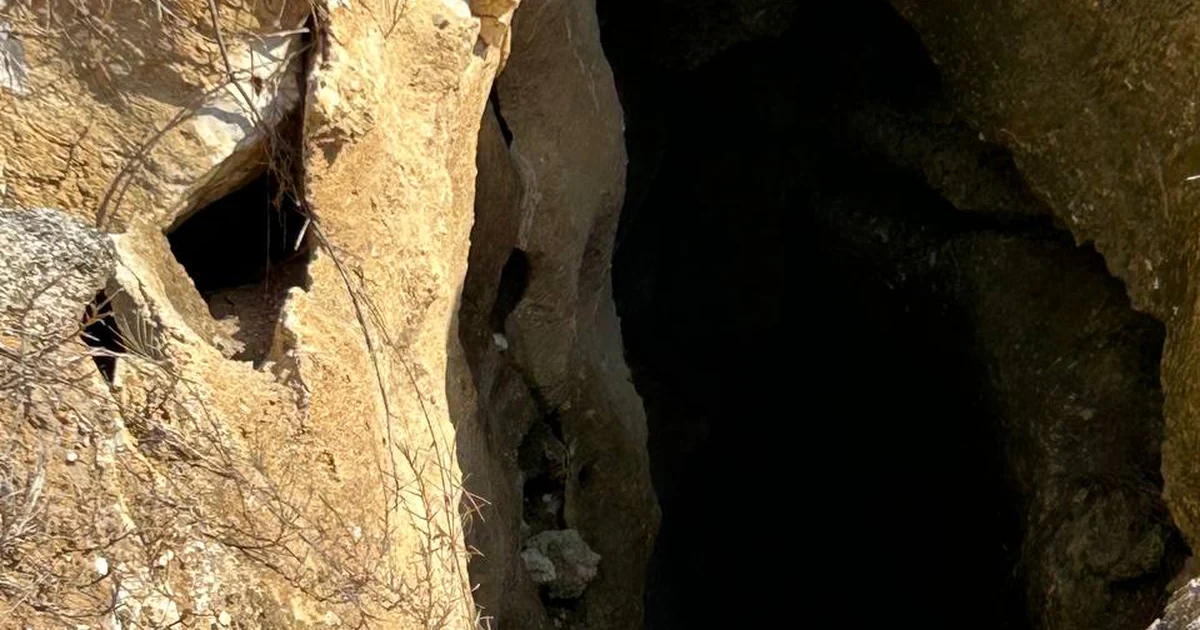
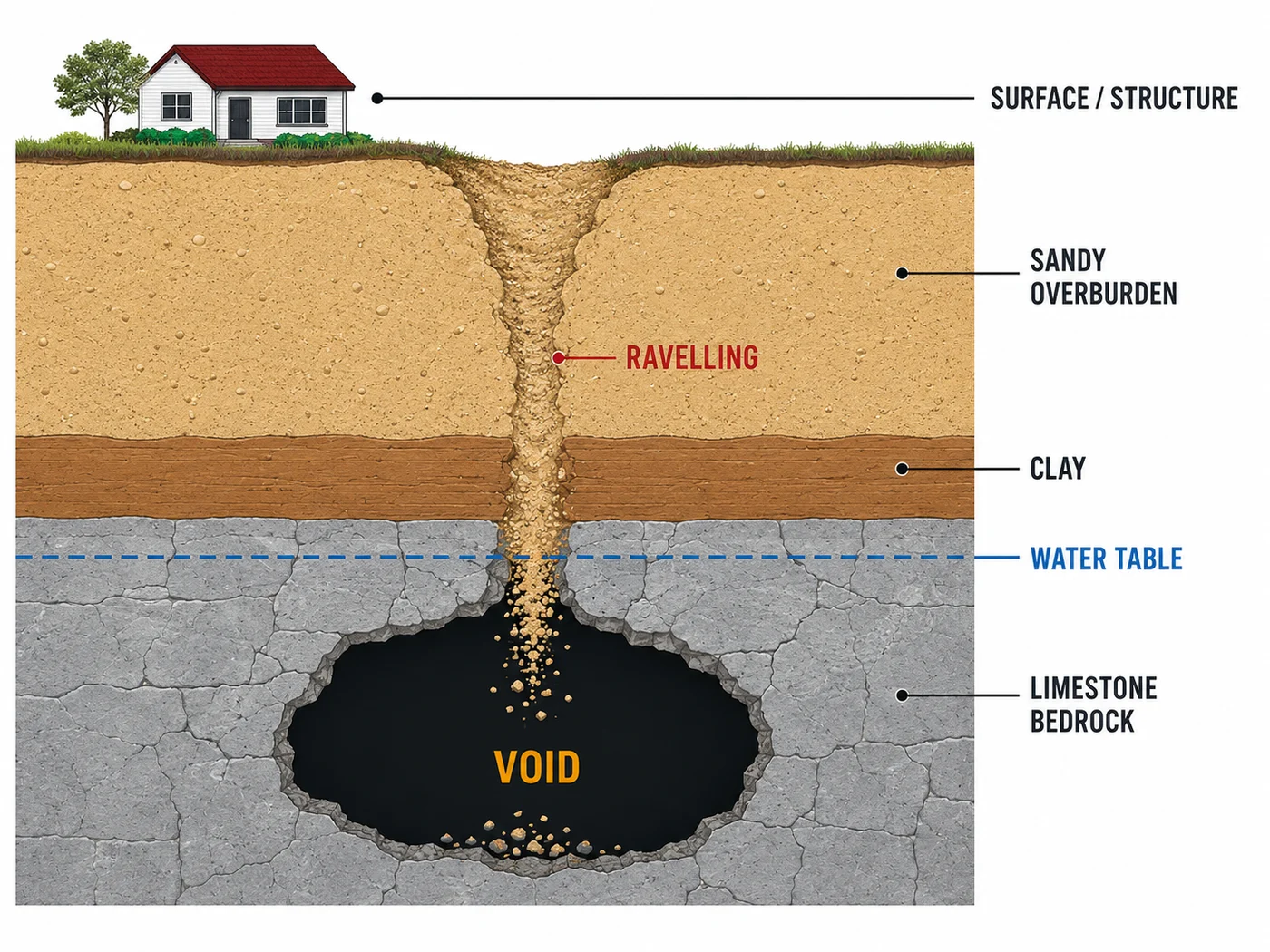
The Florida peninsula is a thick slab of limestone laid down when this was sea floor. Rainwater is slightly acidic, and over many thousands of years it dissolves limestone, leaving voids and channels in the rock. Geologists call that kind of terrain karst. In Central Florida the limestone — around Ocala, it’s literally named the Ocala Limestone — is buried under a blanket of sand and clay, which is why you’ll see the term covered karst.
The cover is where the trouble starts. Sand trickles downward into voids in the rock below, a slow process called raveling. It reaches the surface in two ways. In sandy areas, the ground settles gradually into a broad, shallow bowl over years — a cover-subsidence sinkhole, the common kind. Where a stiff clay layer bridges over a growing cavity, the bridge can fail suddenly — a cover-collapse sinkhole, the dramatic kind that makes the news. Those are much rarer.
Activity isn’t spread evenly. The Tampa–Ocala karst belt — Citrus, Hernando, Pasco, Marion, and Sumter counties — is the most active sinkhole area in the state, which is why insurers and lenders pay closer attention there. If you’re in that zone, see our page on sinkhole inspections in Citrus County. We break the belt down county by county, and explain why soil cover matters more than the county line, in Sinkhole Alley explained for Citrus, Hernando, Sumter, and Marion counties.
What a Real Investigation Looks Like
A legitimate sinkhole investigation has two stages: a screen, then a confirmation.
The screen is ground-penetrating radar, or GPR — an antenna pulled across the property that sends radar pulses into the soil and reads the reflections. GPR is good at flagging disturbed or anomalous soil zones and deciding where to look harder. It cannot confirm a sinkhole on its own, and anyone who tells you otherwise is overselling it. Its real reach on Florida ground, and the cases where it’s the wrong tool, are in what GPR can and can’t find in Florida.
Confirmation comes from Standard Penetration Test borings, or SPT borings. A drill rig advances a hole at the GPR anomalies, driving a sampler into the soil with a standardized hammer and counting the blows it takes. Those blow counts are a direct measure of soil strength at each depth. Very weak zones deep in the profile, drilling fluid disappearing into the ground, and soil structure consistent with raveling are the evidence that actually confirms — or rules out — sinkhole activity.
At FGS, the soil samples go to our in-house laboratory, accredited by FDOT and CMEC, and the findings come back in a report signed and sealed by a Florida-licensed professional engineer. That stamp is what insurers, lenders, and repair contractors act on. Every sinkhole investigation is scoped to the property, so pricing varies; as a reference point, residential geotechnical reports generally run $1,500 to $3,500.
Sinkhole Insurance in Plain Language
Florida Statute 627.707 governs how sinkhole insurance claims are handled, and it splits coverage into two levels that homeowners regularly confuse.
Catastrophic ground cover collapse coverage comes standard in Florida homeowners policies. It sounds protective, but the definition is narrow: an abrupt collapse, a visible depression, structural damage, and the home condemned or ordered vacated. Gradual settlement damage — the common kind — typically doesn’t qualify. Broader sinkhole loss coverage is usually an optional endorsement you have to add, often with its own deductible, and sometimes an inspection before the insurer will write it.
We’re engineers, not adjusters, so take this as orientation rather than coverage advice: read your policy and ask your agent which of the two you actually carry. The time to find out is before you need it.
When to Call Someone — and Who to Call
Call when the signs are progressing or clustering: a crack that keeps growing, a depression that keeps deepening, multiple symptoms on the same side of the house. Call immediately if the ground opens or drops suddenly — keep people away from the edge and notify your insurer.
Who you call matters as much as when. Get the diagnosis from someone who doesn’t sell the repair. A grouting contractor who finds a sinkhole gets a grouting job; an engineer gets paid the same whether the answer is “sinkhole” or “plumbing leak.” FGS investigates and reports — we don’t sell remediation — so “this isn’t a sinkhole” costs us nothing to say. It’s also the answer we give more often than not.