On this page
A geotechnical report for a typical Florida single-family home costs $1,500 to $3,500. Commercial projects typically run $5,000 to $20,000 or more, depending on the size of the structure, the loads it puts on the ground, and how deep the borings have to go. Boring depth is the main cost driver — and in Florida’s karst counties, where voids in the underlying limestone are a real design problem, deeper borings are often not optional. Here’s where the money goes and where it’s safe (and not safe) to economize.
The short answer
Pricing clusters into a few brackets. The table below reflects what Florida Geotechnical Services typically sees across residential and commercial work statewide in 2026.
Those figures cover a standard pre-construction subsurface exploration: drill, sample, test, analyze, recommend. An insurance-driven sinkhole investigation under Florida Statute 627.707 is a different animal — a prescribed, more intensive testing protocol with a price to match. Don’t budget one against the other.
What drives the cost up or down
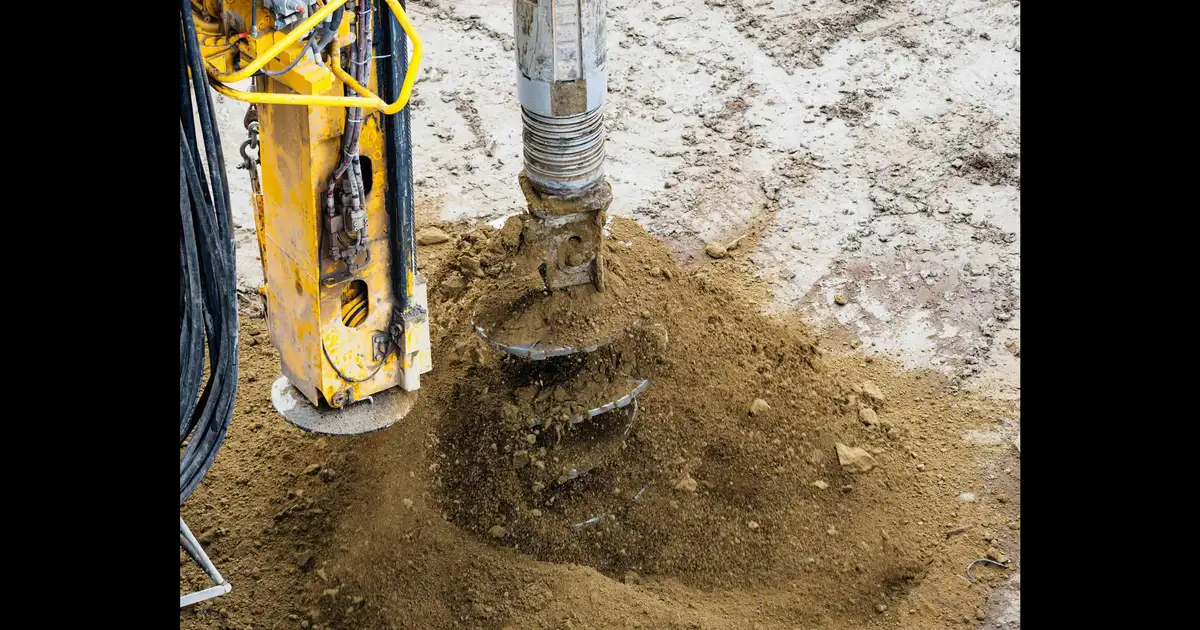
Nearly every line in a geotechnical proposal traces back to four components: mobilization (getting a drill rig and crew to your site), drilling billed by the foot, laboratory testing on the recovered samples, and engineering time to analyze the data and write the report. Move any one of them and the price moves.
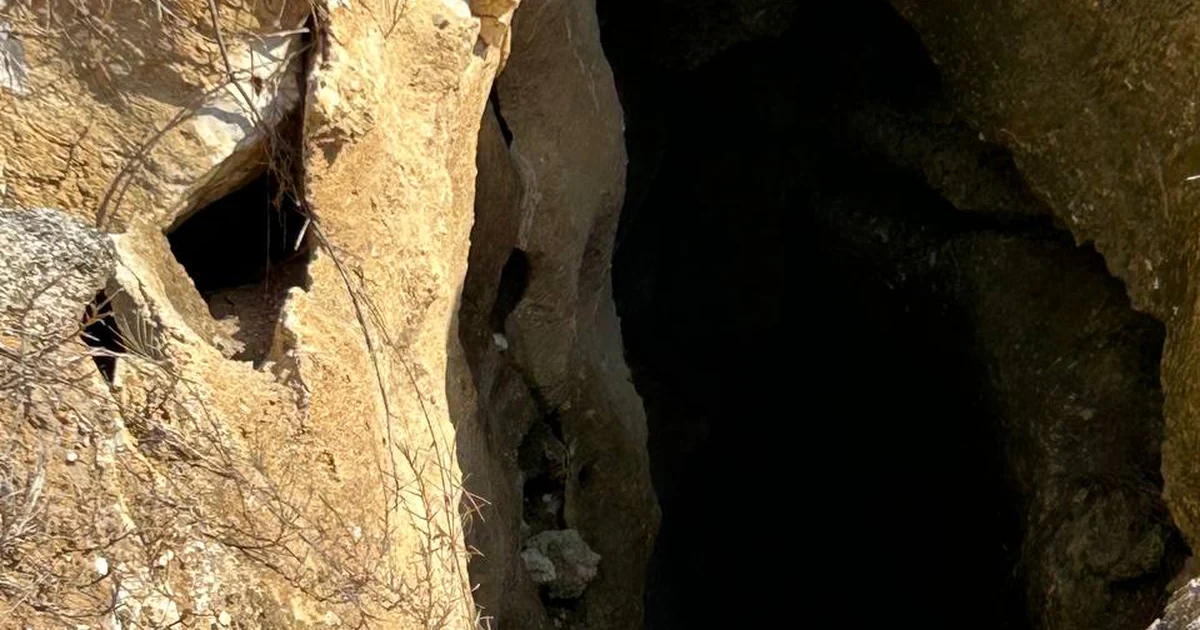
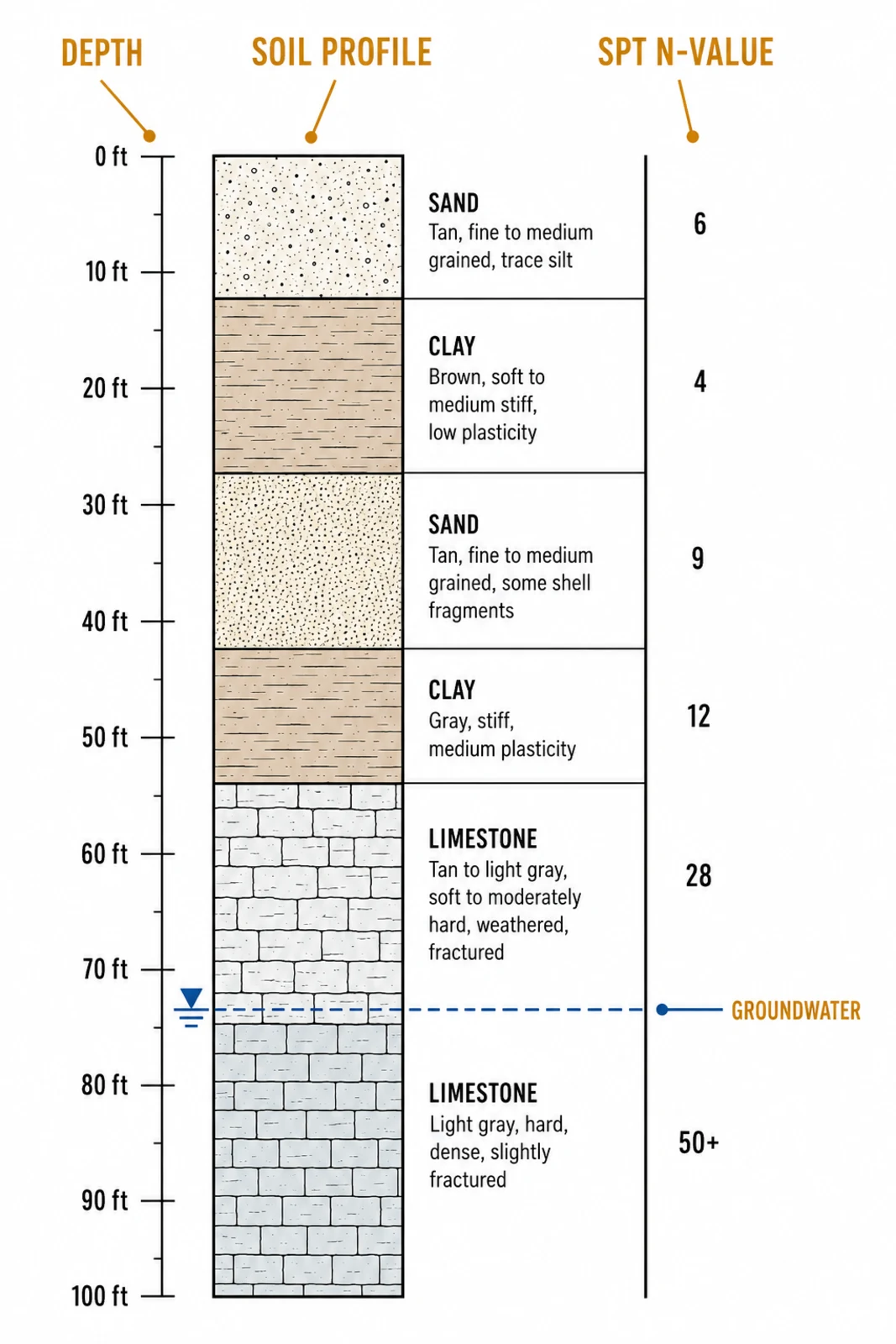
- Boring depth. The biggest lever by far. A light wood-frame house on clean sand may only need borings to 15–20 feet. A site in karst terrain may need 50 feet or more to check for voids and soft zones above the limestone. Drilling is priced per foot, so depth dominates the invoice.
- Number of borings. A boring tells you about the soil column at that boring. A bigger footprint, multiple structures, or visibly variable ground means more of them.
- Site access. Mobilization pricing assumes a truck-mounted rig can drive to each boring location. Soft ground, trees, or tight spaces can force a track rig or hand clearing, and that costs more. FGS runs its own drilling crews, which keeps scheduling and access problems in-house instead of between two subcontractors.
- Groundwater. Much of Florida has water within a few feet of the surface. Wet, caving sands slow drilling and can require casing or drilling fluid to keep the hole open.
- Lab scope. Moisture contents and gradations are inexpensive. Consolidation, organic content, and corrosivity testing add cost — but only get run when the soils justify them.
- Analysis complexity. Recommending a shallow footing on good sand takes fewer engineering hours than evaluating deep foundation options, a retention pond, or a surcharge program over compressible soils.
Want a real number instead of a range?
Send the parcel address and what you’re building — an engineer scopes it, not a sales rep.
Residential vs. commercial: why the price gap
A house is light. Its loads spread through a shallow zone of soil, so a few short borings and a standard lab suite usually answer the question. That’s why most residential reports land between $1,500 and $3,500.
Commercial structures push stress deeper. Heavier column loads enlarge the volume of soil that matters, plan reviewers and lenders scrutinize the report harder, and the analysis frequently has to compare foundation alternatives — spread footings versus piles, ground improvement versus over-excavation. More footage, more lab work, more engineering. The liability scales too: the recommendations in that report carry the building. Either way, the report is reviewed and sealed by a Florida-licensed Professional Engineer; what changes is the scope underneath the seal.
What’s included in the price
A complete report from a firm offering full geotechnical engineering services should include:
- Field exploration — Standard Penetration Test (SPT) borings per ASTM D1586, with logs showing soil type and blow counts at each depth
- Measured groundwater levels and an estimate of the seasonal high water table
- Laboratory testing on recovered samples — FGS runs these in its own FDOT and CMEC accredited soils laboratory, so there’s no outside-lab markup or queue
- Allowable bearing capacity and a specific foundation recommendation, with estimated settlement
- Site preparation and compaction requirements your contractor can build to
- The seal of a Florida-licensed P.E.
What it doesn’t include: environmental assessments, boundary surveys, and construction-phase density testing are separate scopes. If a proposal is vague about boring count, depth, or lab testing, ask. Vague scope is how lowball numbers happen.
How to keep the cost down
- Send everything you have up front. A site plan, structural loads, even an old report from the parcel lets the engineer scope exactly what’s needed instead of padding for unknowns.
- Clear access before the rig shows up. Standby time and a second mobilization cost real money.
- Drill everything in one mobilization. Phasing borings across multiple visits multiplies trip charges.
- Test before the design is final. Shifting a building on paper is free. Redesigning a foundation after permitting is not.
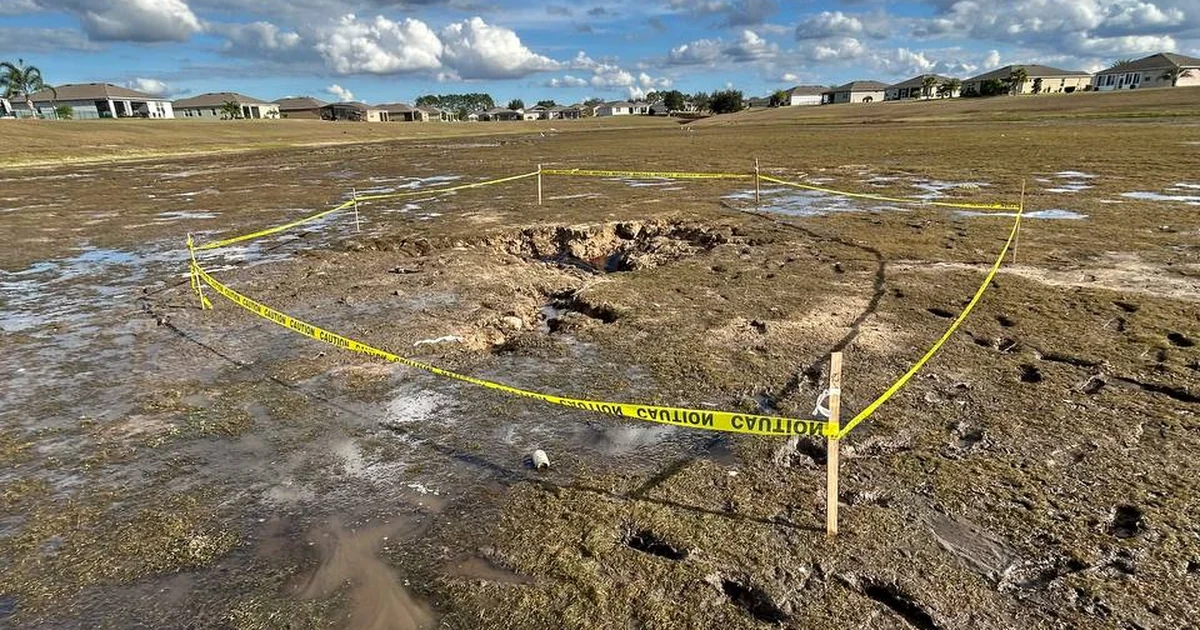
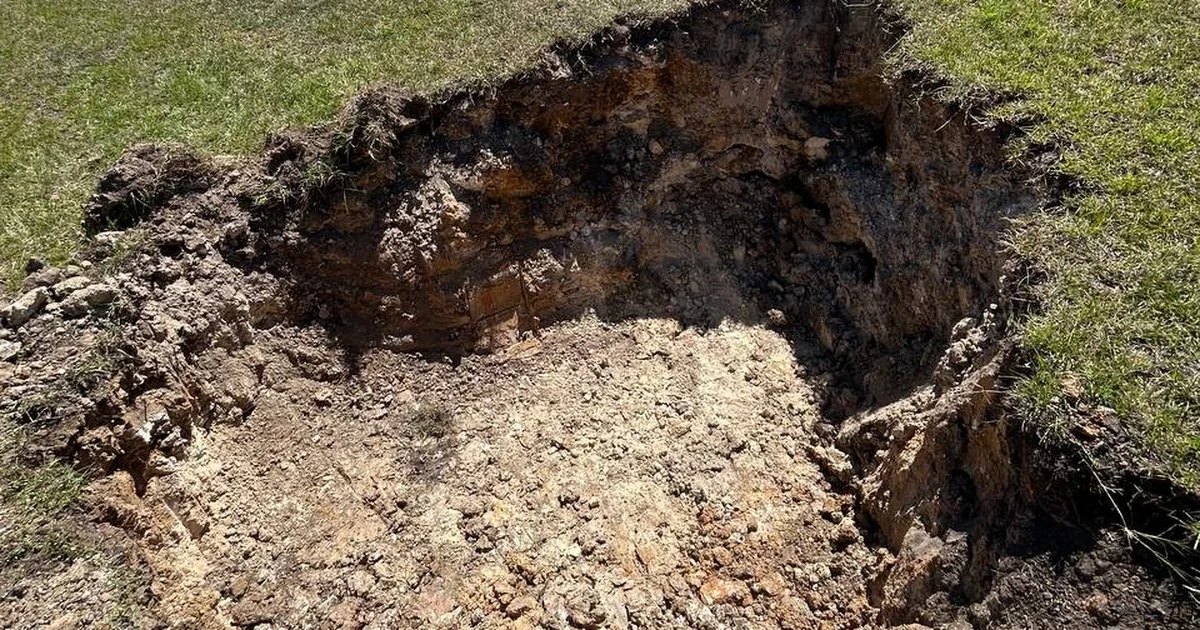
- Do not cheap out on borings in karst country. In sinkhole-prone areas, the cheap proposal is usually the one that stops drilling before the depth where the problem lives. If the site shows signs of subsidence — depressions, cracking, ponding that wasn’t there before — a proper sinkhole investigation is the right scope, not a thinner soil report.
- Be careful with the lowest bid. A minimum-scope report that a building official rejects means re-drilling — paying twice for one answer.
Get a number for your site
Florida Geotechnical Services is based in Ocala and works statewide, with our own rigs, our own accredited lab, and a Florida-licensed P.E. reviewing every report. Send us the parcel address and what you’re planning to build through our free quote form or call (352) 619-9292, and we’ll come back with a firm scope and price — not a range off a blog post.